The Tsongkhapa Thangka
A Sacred Visual Narrative of Wisdom and Protection
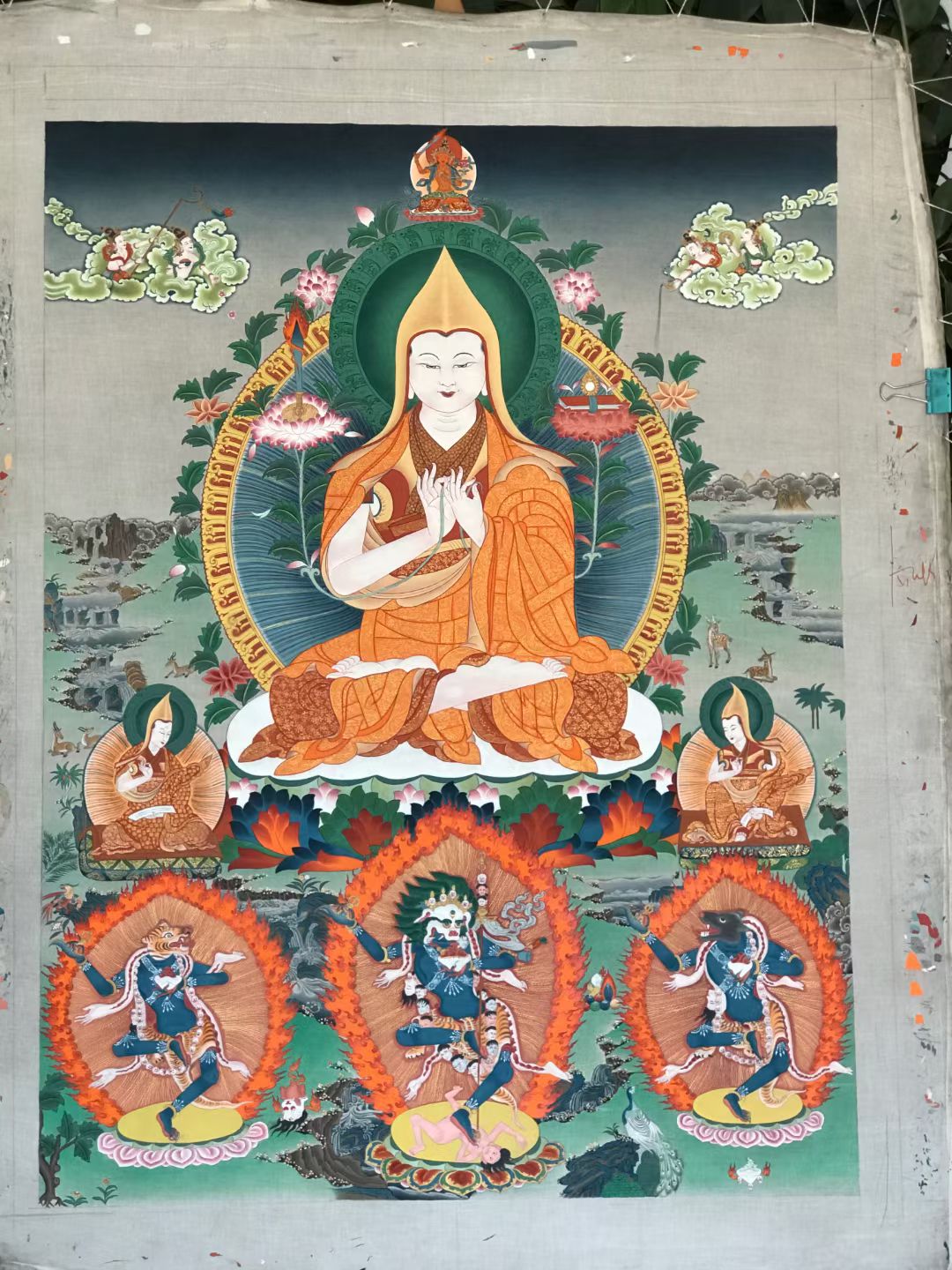
This hand-painted Tibetan thangka is a profound and visually striking representation of the core Gelug (Yellow Hat) Buddhist tradition, weaving together the foundational lineage, transcendent wisdom, and fierce protective energies that define the path to enlightenment. Far more than a work of art, it serves as a devotional object, a meditation tool, and a sacred map of the spiritual journey.
The Central Master: Je Tsongkhapa, the Incarnation of Manjushri
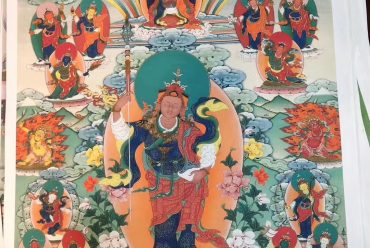
At the heart of the composition sits Je Tsongkhapa (1357–1419), the revered founder of the Gelug school of Tibetan Buddhism. Recognizable by his iconic yellow pandita hat and flowing saffron robes, he embodies the synthesis of compassion and wisdom.
– The Dharmachakra Mudra: His hands form the gesture of turning the wheel of the Dharma, signifying his role as a great teacher who revitalized monastic discipline and philosophical study in Tibet.
– Wisdom and Scripture: Two blooming lotuses rise from his shoulders. The right holds the flaming sword of Manjushri, symbolizing the sharp, unobscured wisdom that cuts through ignorance. The left supports a sacred volume of the Prajñāpāramitā Sutra, representing the teachings he codified.
– Seat of Enlightenment: He sits serenely in the lotus position on a moon disc and lotus throne, signifying his purity and awakening, framed by a radiant halo and an aura of deep blue.
Flanking him are his two chief disciples, Gyaltsab Je (right) and Khedrup Je (left). Together, they form the “Three Founders,” representing the complete transmission of his teachings: ethical discipline, profound scholarship, and tantric practice.
The Upper Realms: The Source of Wisdom
– The Guiding Light: Directly above Tsongkhapa, a radiant form of Manjushri, the Buddha of Wisdom, presides. This is the primary yidam (meditational deity) of Tsongkhapa, confirming his identity as a direct emanation of transcendent wisdom.
– The Celestial Retinue: In the clouds on either side, playful and graceful devas and dakinis offer praise, symbolizing the auspicious conditions and divine blessings that surround the path of Dharma.
The Protective Forces: The Three Wrathful Dakinis
The lower register bursts with the dynamic, flame-engulfed forms of the Three Fierce Dakinis, the primary protectors of the lineage. Their wrathful appearance is not one of anger, but of compassionate ferocity—aimed at destroying the obstacles, ego-clinging, and negative energies that hinder spiritual progress.
– Central: Singhamukha (Lion-Faced Dakini): The most powerful of the three, with a white lion’s head and a blue body. She stands victorious over a prone human form, representing the destruction of the ego. As a protector of secret mantras, she is the swiftest to grant assistance to sincere practitioners.
– Left: Tiger-Faced Dakini: Embodying fearlessness and primal energy, she complements her sister, clearing away obstacles with the power of her roar.
– Right: Bear-Faced Dakini: Representing grounded, unshakable force, she completes the triad, ensuring that no subtle or gross impediment remains unvanquished.
All three dance upon lotus seats and sun discs, their wrathful nature a skillful means of guiding beings toward ultimate peace.
The Symbolism and Significance
This thangka follows the classic structure of a “Lineage Tree,” offering a complete visual path for the practitioner:
1.Root: The Three Dakinis provide protection.
2.Trunk: Tsongkhapa and his disciples represent the living lineage and its teachings.
3.Crown: Manjushri, the source of all wisdom.
The vibrant mineral pigments—deep blues, fiery oranges, and pure whites—are not just decorative but symbolic, infusing the painting with the very essence of the qualities they represent. The background landscape, with its snow-capped mountains, rivers, and deer, depicts the sacred land of Tibet, where these teachings took root.
Owning and displaying this thangka is believed to invite the blessings of the lineage, foster wisdom and clarity in one’s practice, and create a powerful atmosphere of protection and spiritual aspiration in any space.
Note:
-From Florasay Art Collection.
-Natural mineral painting by professional temple artist with 30 years experience.
-Customization, Consecration & Blessing Empowerment available
Copyright of pictures and text reserved by Chengdu Florasay Cultural Communication Co., Ltd
Thangka classes and experiences available at our studios in Chengdu and Tibet.
For more information or purchases, please contact us by email:
pandawego.info@florasay.cn